
Everyone knows that mushrooms are a separate kingdom in the taxonomic classification, however not everyone knows this "definitive cataloging", compared to the plant kingdom, is quite recent.
The classification of Linnaeus gathered them together with the Tallophyte plants and they were included only later in the kingdom of the Fungi or Mycota.
Still, only in 1968 we read about the criteria for definitive cataloging, which take into account morphological characteristics, nutrition, cellular structure, energy reserve mechanisms and reproductive structures; characteristics that from an evolutionary point of view, make mushrooms closer to animals than to plants.
There are about 1.5 million species, minor in number and diversity only compared to those of insects and it is estimated that only 5% of them has been clearly identified.
Mushrooms then outnumber plants about 6 times and make up 25% of the Earth's biomass, with sizes ranging from about 2 microns up to a kilometer. In fact, the largest living being in the world is a fungus identified in 1988 in the eastern part of the State of Oregon, in the Malehur National Forest: it is an example of Armillaria solidipes spread over an area of 161 km2, occupying 965 hectares with an estimated weight of about 6,286 tons: it is 8560 year-old in the "older" area and 1950 year-old in the "younger".
Macroscopic mushrooms, such as porcini and morels, grown and available in grocery stores, represent only a small fraction of the diversity in the mushroom kingdom. Molds, for example, are a large group of microscopic fungi that include many of the main plant parasites, allergenic species and opportunistic pathogens of humans and other animals.
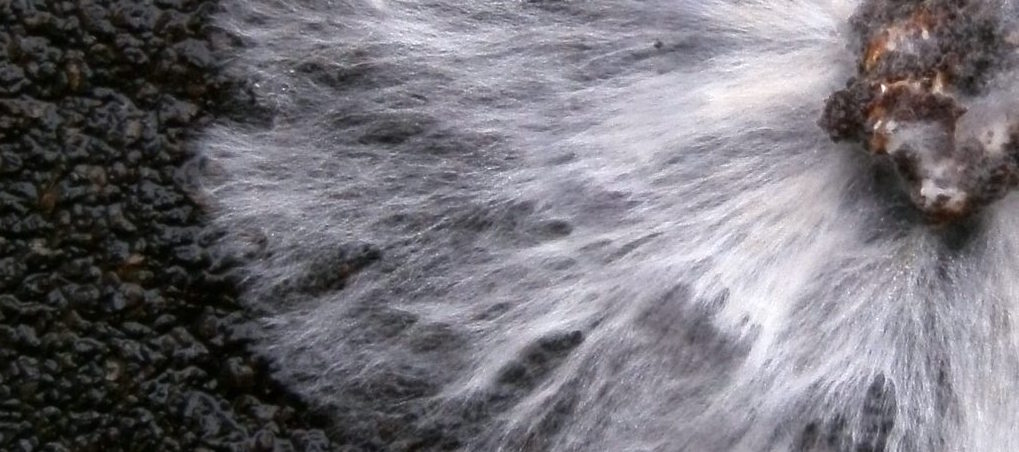
Mushrooms are generally characterized by filamentous vegetative cells called hyphae. A mass of hyphae forms the thallus (vegetative body without specialized structures) of the fungus, called mycelium. The most phylogenetically primitive molds (for example, water molds, bread molds, and other sporangia forms) produce cenocytic filaments (multi-nucleated cells without crossed walls), while the more advanced forms produce cross-walled hyphae (septa) which divide the filament into uni-nucleated and multi-nucleated compartments. However, the septum provides cytoplasmic communication including intercellular nuclei migration.
Many fungi do not look like filiform hyphae, but like unicellular forms called yeasts, spherical-shaped, reproducing by vegetative budding with a diameter of a few microns. Some of the fungal pathogens have double morphology such as Candida albicans whose ability to vary from normal yeast to a filamentous form of invasion of host tissues is part of the success of its aggression strategy.
The main difference between mushrooms and plants is the inability of mushrooms to perform chlorophyll photosynthesis: they are therefore not able to produce organic matter and must take nourishment from other organic substrates of plant, animal, bacterial or fungal origin. They are indeed heterotrophic organisms.
Mushrooms can obtain the compounds necessary for their survival from non-living organic substrates (saprophytes), or living organic structures (parasites) by absorbing nutrients through their cell wall.
Small molecules (e.g., simple sugars and amino acids) accumulate in an aqueous film surrounding the ifa or yeast and simply diffuse through cell walls. Macromolecules and insoluble polymers (for example, proteins, glycogen, starch and cellulose), on the other hand, must undergo preliminary digestion before being absorbed by the fungal cell. This process involves the release of specific enzymes that cause the extracellular digestion of the substrate, with a subsequent spread of the products of digestion through the fungal cell. It is through the action of these digestive enzymes that the fungal pathogens are able to penetrate through the natural barriers of the host.
Individual mushrooms can communicate with each other by means of pheromones, chemical compounds that activate social relationships between different organisms. If they recognize an opponent, they can also inject toxins into the substrate to repel it or, in the presence of a competitor, absorb nutrients from his hyphae until its death.
Cell walls
Not all fungal species have cell walls, however, for those which have it, cell wall synthesis is an important factor in determining the final morphology of fungal elements.
Fungal walls also protect cells against mechanical damage and block the entry of toxic macromolecules. This filtering effect proves to be particularly important in protecting against fungal pathogenic compounds found in surrounding environment or produced by hosts.
Fungal cell walls are also essential to prevent osmotic lysis. Even a small lesion in the cell wall can cause cytoplasm extrusion as a consequence of internal pressure (turgor) of the protoplasts. The composition of fungal cell walls is relatively simple and does not include substances typically found in plant and animal cells.
Mushrooms' cell walls mainly consist of chitin and not cellulose, like plants. Chitin is much more resistant to microbes' attacks, drought and cold. It is one of the main components of the exoskeleton of insects and other arthropods.
In the wall, besides chitin, is chitosan (deaciled with respect to the chitin in position 2 on the amino group of N-acetylglucosamine) and other polysaccharides, among which the most important are beta-glucans. The latter are the subject of many studies and key elements of multiple therapeutic activities. Their importance is such that they deserve a further in depth-analysis.
Habitat, reproduction and classification
Mushrooms and bacteria are not just parasites of plants and animals but also ecologically important decomposers.
Often both of these organisms inhabit the same ecosystem and therefore compete for food supply. From this "copresence" comes the production of both organisms, fungi and bacteria, of secondary metabolites that work as inhibitors of microbial growth or toxins. These compounds constitute a rich range of antimicrobial agents, many of which have been developed as antibiotics in pharmacology (for example, penicillin from Penicillium chrysogenum, nystatin from Streptomyces noursei, amphotericin B from S. niveus). Also the Lentinano polysaccharide extracted from Lentinus edodes (Shii-take) is recognized by the Japanese Ministry of Health as a drug for the treatment of stomach cancer (1985).
Mushrooms reproduce by means of spores, microscopic cells released in a considerable number that, while germinating, produce a so-called "primary mycelium". Through the spread of the spores, invisible to the naked eye, fungi are present almost everywhere. It has been calculated that we inhale from 1 to 10 spores with each breath, so about 300,000 a day.
There are mushrooms which can decompose hydrocarbons and their use for environmental purposes is now being researched.
In the official systematic classification, mushrooms are divided into four phyla:
- Ascomycota: they make up 75% of mushroom species; the best known are morchelle, truffles, yeasts and Penicillium. They feed on biological matter, both alive and dead; one of the characteristic structures is the asco, grouping of cells in which meiosis occurs;
- Basidiomycota: all those species of fungi that have a mycelium set, sexed and asexual reproduction with non-mobile spores;
- Chytridiomycota: aquatic mushrooms; the name refers to the chitidrio, the structure which contains the spores; Chytridiomycota are the most primitive of fungi and are generally saprophytes;
- Zygomycota: fungi which sexually reproduce (hence the name) with monoflagellate spores; they can be both saprophytes and parasites (both of animals and of plants). Zygomycetes are almost exclusively terrestrial and are widespread on all continents.
In the macrofungi visible to the naked eye, which belong to the ascomycetes and the basidiomycetes, what we can see, popping out of the ground or the substrate of culture, is constituted by the aerial mycelium: the set of hyphae which constitutes the carpophorus (or "fruiting body") of the fungus, designed for reproductive purposes to spread the spores.
According to an empirical classification, macrofungi are also distinguished in:
- Epigees: a fruiting body above the ground;
- Hypogea: a fruiting body below the ground;